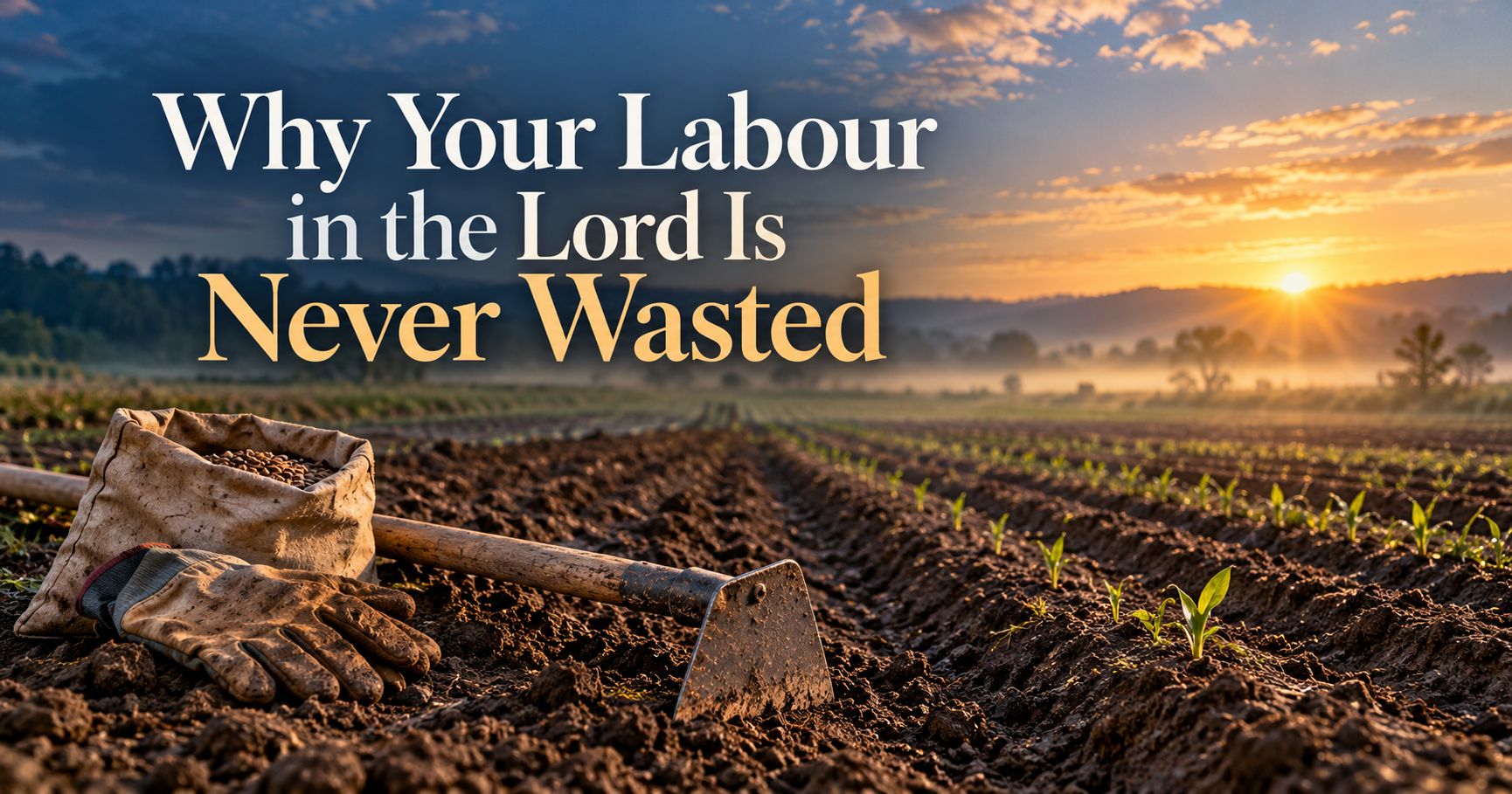
Some responsibilities are difficult because we do not know what to do. Others become difficult after the assignment is clear and we have been doing it for a long time.
The need remains. The work continues. The person carrying it is tired.
This happens in parenting, caregiving, prayer, discipleship, employment, and church ministry. We begin with conviction. Then the responsibility lasts longer than expected. Results become hard to measure. Encouragement grows scarce.
Sooner or later, the question surfaces: Does any of this still matter?
Paul answers that question in one of Scripture’s great chapters on resurrection. His answer reaches beyond morale. He does not say our work matters because every project will succeed. He says it matters because Christ has been raised.
The “Therefore” That Holds the Command Together
First Corinthians 15 is Paul’s sustained defence of the resurrection. If the dead are not raised, then Christ has not been raised. Christian preaching would be empty, faith would be futile, and believers would remain in their sins.
But Christ has been raised.
Death will not have the final word. The perishable will be clothed with the imperishable. The mortal will put on immortality. Paul celebrates God’s victory through Jesus Christ and then writes:
“Therefore, my dear brothers and sisters, stand firm. Let nothing move you. Always give yourselves fully to the work of the Lord, because you know that your labor in the Lord is not in vain” (1 Corinthians 15:58, NIV).
That “therefore” matters. Paul does not tell tired Christians to keep going because quitting would look bad. He does not shame them for finding the work costly.
He roots perseverance in what God has already done. Christ has been raised. Death has been defeated. Resurrection life has entered the world. Therefore, stand firm.
Christian perseverance begins with revelation before it becomes a responsibility. We stand within Christ’s victory before we take another step in His work.
Resurrection Makes Present Obedience Matter
Resurrection can sound like a doctrine reserved for funerals and the end of history. Paul brings it into the middle of present labour.
Earlier in the chapter, he speaks about danger and death. If there were no resurrection, costly obedience would be foolish. The sensible response would be, “Let us eat and drink, for tomorrow we die” (1 Corinthians 15:32).
Christ is risen. Because He is risen, death cannot erase what is done in Him.
The prayer offered with no witness is not lost. The lesson prepared carefully for a few people is not empty. The child guided patiently, the person encouraged again, and the responsibility carried with integrity matter to Christ.
Some of that work may produce fruit long after our part is finished. Some of it may never yield the result we hoped to see. Paul does not ask us to manufacture visible success so we can prove our obedience counted.
The assurance runs deeper: labour “in the Lord” participates in the life of the risen Lord.
“Not in Vain” Is Not a Promise of Easy Success
A programme can end. An opportunity can close. A person can reject wise counsel. We may sow faithfully and still grieve the outcome.
Paul does not promise that every plan will unfold as intended. He promises that labour offered in communion with Christ is not empty.
That distinction protects us from measuring faithfulness by numbers alone. Immediate visibility can be encouraging, but it cannot be the final judge of a work’s value. A ministry may look small and still be deeply faithful. Another may appear successful while relying on methods that do not resemble Christ.
The Lord sees the work from a vantage point we do not have. He sees its hidden cost, its unseen influence, and its place within a story larger than our lifetime.
We labour faithfully and leave the final account with Him.
Give Yourself to the Lord’s Work, Not Every Work
Paul says to give ourselves fully to “the work of the Lord.” The phrase gives the work weight. What Christ entrusts to us deserves careful, wholehearted service.
It also gives the work boundaries.
We are servants, not saviours. We are not responsible for meeting every need, controlling every outcome, or remaining in every role forever. Wholehearted faithfulness does not mean being indiscriminately available.
Some weariness comes from costly obedience. Some comes from carrying work Christ never assigned. Some comes from refusing help or preserving a method that no longer serves the mission.
Before telling yourself simply to keep going, ask a more exact question: What is the Lord’s work for me in this season?
That question may confirm the assignment. It may also require you to release something that grew around the assignment but never belonged to it.
Take the Next Faithful Step
You do not need to possess the whole future before you obey today.
Return to the resurrection. Christ is alive, and His victory has already determined the end of the story. Ask what faithfulness requires now. Then do the next good thing within reach.
Pray once more. Prepare the lesson. Keep the promise. Make the difficult call. Receive help. Change the method if wisdom requires it.
The result may remain hidden for a while. That does not make the labour empty.
Christ has been raised. What is done in Him is never forgotten, meaningless, or wasted.






You must be logged in to post a comment.