Many believers sincerely want to know their purpose. They ask, “What has God called me to do? What is my assignment? Where do I fit within his work?”
Those are important questions. But they often rest on an assumption that Scripture does not give us. We imagine that somewhere, one great assignment is hidden from us and that our lives cannot become meaningful until we discover it.
We wait for a dramatic sign, an extraordinary opportunity, or a complete picture of the future. Meanwhile, ordinary responsibilities begin to feel like distractions from the important life we hope to live someday.
Ephesians 2 offers a better understanding of purpose.
Purpose Begins With What God Has Done
Paul does not begin by telling us to discover our potential, identify our platform, or prove our usefulness. He begins with our spiritual condition apart from Christ.
We were dead in transgressions and sins. We could not rescue ourselves or produce spiritual life through effort.
Then the direction of the passage changes:
“But because of his great love for us, God, who is rich in mercy, made us alive with Christ” (Ephesians 2:4–5).
Purpose begins with God’s action, not ours.
God loved us. God showed mercy. God made us alive with Christ. God saved us by grace. Before we perform any work for God, we are the recipients of God’s work in Christ.
This order matters because it prevents purpose from becoming another way of earning significance.
Your Assignment Does Not Create Your Worth
Some people hope that discovering an impressive assignment will finally prove that their lives matter.
If our worth depends upon visible usefulness, we will become anxious whenever our work is hidden or our results appear small. We may envy people whose responsibilities attract greater attention. We may pursue opportunities God has not given us because ordinary obedience does not feel important enough.
But the gospel does not make usefulness the foundation of identity.
“For it is by grace you have been saved, through faith, and this is not from yourselves, it is the gift of God, not by works, so that no one can boast” (Ephesians 2:8–9).
We do not become somebody by finding an assignment. In Christ, God has already received us, made us alive, and brought us near.
We are not working to become loved. We work because we have been loved. We are not serving to make ourselves belong. We serve because grace has made us God’s own.
Assignment can express our identity, but it cannot create it.
We Are God’s Work Before We Perform Our Work
Paul continues:
“For we are God’s handiwork, created in Christ Jesus to do good works” (Ephesians 2:10).
We are God’s work before we perform our work.
Our lives are not self-created projects over which we possess absolute control. We have been formed, redeemed, and placed under the gracious authorship of God.
This does not mean that every desire or ability is automatically being used faithfully. Gifts can be neglected. Ambition can distort discernment. Opportunities can be wasted.
It means that we receive our lives as material entrusted to us.
Our abilities, limitations, experiences, relationships, and present season become places where we ask, “How can the life God has given me be offered back to him?”
Discovering purpose is not inventing a more impressive version of ourselves. It is submitting the life we have received to the purposes of God.
Scripture Speaks of Good Works in the Plural
Paul says that we were created in Christ Jesus “to do good works, which God prepared in advance for us to do.”
The good works are plural.
Paul does not describe one hidden achievement upon which the meaning of our entire life depends. He describes a life shaped by prepared acts of obedience.
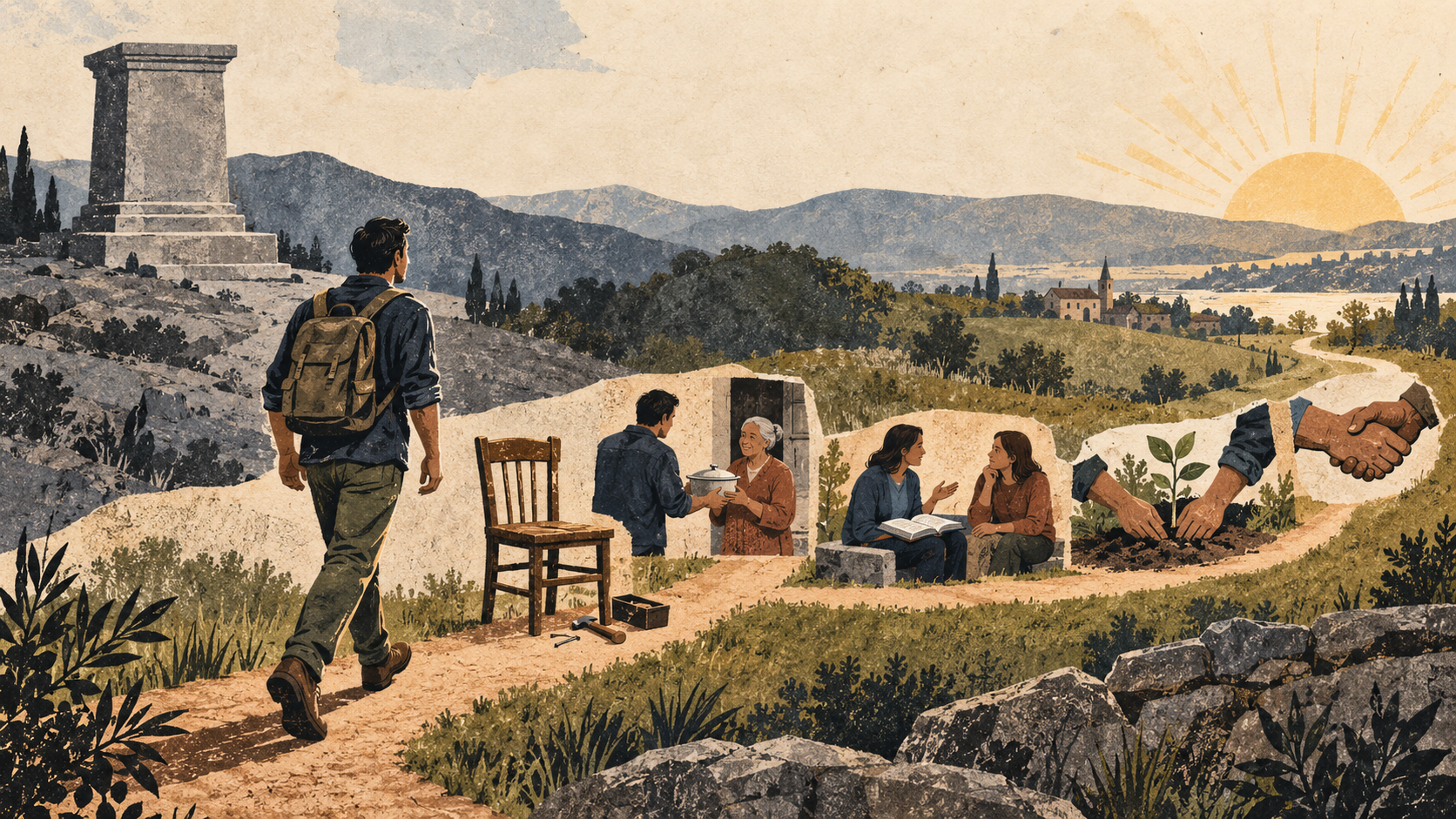
Purpose is not only an office, career, ministry, or project. It is a way of walking.
The good works God prepares may include telling the truth, keeping a promise, caring for a family, encouraging someone who is discouraged, sharing the gospel, discipling a believer, performing honest work, giving generously, practising hospitality, or using a spiritual gift for another person’s good.
Some become long-term responsibilities. Others belong to a particular season. Some are public. Many are noticed only by God and the people directly affected.
A meaningful life may not be built around one dramatic moment. It may be formed through thousands of faithful decisions.
Ordinary Responsibilities Are Not Interruptions
The search for something exceptional can make present duties appear spiritually insignificant.
A person dreams about leading many people but gives little attention to those already within reach. Someone longs for public ministry while neglecting private character. Another waits for a major opportunity while leaving present promises unfinished.
But the people, roles, and responsibilities already around us are often the first places where prepared works become visible.
Raising children faithfully is not an interruption to purpose. Keeping your word is not a lesser assignment. Serving a struggling person, doing honest work, strengthening a congregation, and remaining faithful in an unnoticed role all belong within the life of Christian obedience.
God does not need to remove us from ordinary life before our lives can serve him.
Divine Preparation Does Not Eliminate Human Response
God prepares the good works, but Paul still says that we must do them.
Divine preparation establishes the opportunity for obedience. It does not make our participation automatic.
God may place a person within our reach, provide an opportunity, give us a capacity, or bring a responsibility clearly before us. Yet we must still respond.
The conversation must be initiated. The promise must be kept. The lesson must be prepared. The relationship must be repaired. The gift must be used.
God goes before us, but we must walk.
You Do Not Need the Entire Road
The desire for one great assignment is often accompanied by a demand for complete certainty.
We want to know where the road will lead, how long the work will last, whether it will succeed, and how it will fit into the rest of our lives.
God sometimes gives long-term direction. More often, he gives sufficient light for the next act of obedience.
Clarity frequently develops while we walk in what is already clear.
You may not know what responsibility will emerge five years from now. You can still honour Christ in the responsibilities before you today.
Conclusion
Your life does not depend upon discovering one spectacular assignment hidden somewhere in the future.
By grace, God has already given you your deepest identity. In Christ, he has created you for a life of good works. These works may include significant long-term responsibilities, but they also include the ordinary acts of truth, service, courage, generosity, and love through which faith becomes visible.
Do not wait for one great thing while neglecting the work already before you.
The path of purpose is often discovered one faithful step at a time.

