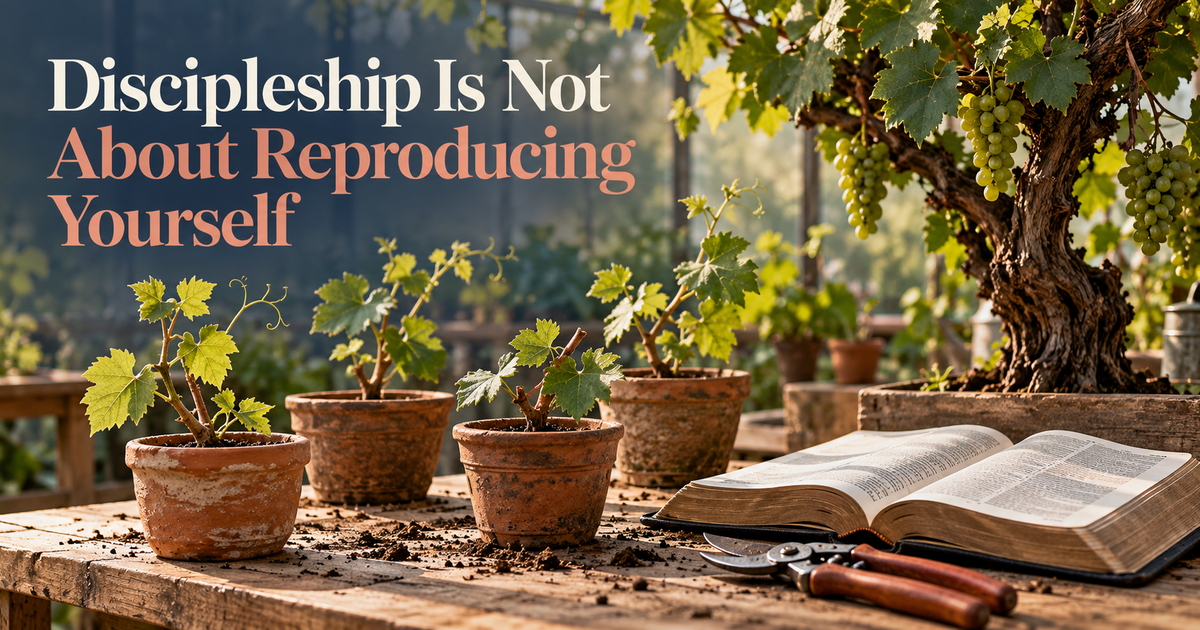
The language of multiplication can sound impressive. Leaders speak about reproducing themselves, extending their influence, or raising people who can carry their vision.
Some of that language may be well intended. Yet it can quietly place the leader at the centre of a work that belongs to Christ.
People are not instruments for enlarging our ministries. They are not copies to be shaped around our preferences, personality, or way of doing everything. Christian discipleship has a different goal.
We want to see Christ formed in people.
Paul tells Timothy,
“Be strong in the grace that is in Christ Jesus.” He then instructs him to entrust what he has heard to reliable people who will also be qualified to teach others (2 Timothy 2:1–2).
The truth must continue, but Timothy is not its centre. Christ is.
Multiplication Begins With Grace
Paul does not begin with Timothy’s confidence, charisma, or natural ability. He tells him to be strong in the grace found in Christ Jesus.
That matters because discipling another person can expose our limits. Growth takes longer than expected. The same questions return. A person understands one lesson and struggles with the next. Encouragement does not always produce immediate change.
If multiplication depends on our ability to control results, frustration will follow. We can teach, model, pray, correct, and remain present. God gives growth.
Grace also keeps the disciple-maker humble. What we pass on did not originate with us. The gospel belongs to Christ. The gifts we use came from Him. Even the lessons learned through experience were formed under His patient care.
We are stewards of what we have received.
Pass On Truth Through a Faithful Life
Paul asks Timothy to entrust what he has heard to reliable people. The content matters. Timothy is not free to reshape apostolic teaching around changing preferences.
But truth is not passed on through words alone.
Timothy had observed Paul’s teaching, conduct, purpose, faith, patience, love, endurance, and suffering. He heard the message and watched a life being brought under its authority.
That is why discipleship cannot be reduced to transferring notes. People need teaching, but they also need to see repentance, prayer, patience, courage, and ordinary obedience lived nearby.
This does not require perfection. If flawless conduct were the qualification, no Christian could help another. It does require honesty. A disciple-maker should be accountable, teachable, and willing to admit failure without pretending that failure does not matter.
People learn something important when they watch a mature believer receive correction, repair harm, and return to obedience.
Do Not Create Dependence on Yourself
Unhealthy discipleship makes the leader indispensable. Every decision must be approved. Every question must return to the same person. The disciple may become loyal to the mentor while remaining unsure how to listen to Scripture, seek wise counsel, and walk responsibly with Christ.
Healthy discipleship moves in another direction.
It helps people know Christ, understand His Word, take their place in His body, and carry appropriate responsibility. Over time, they become able to strengthen someone else.
This requires leaders to release control. The person you help may not sound like you, organise like you, or serve in the role you imagined. That is not necessarily a problem. Unity in Christ does not erase personality, culture, experience, or gifting.
The goal is faithfulness to Christ, not resemblance to the mentor.
Begin With One Person and One Faithful Step
Discipleship does not always begin with a formal programme. It often begins when one believer pays sustained attention to another.
A parent teaches a child to pray. A mature Christian reads Scripture with a new believer. An experienced servant invites someone to learn a ministry task. A friend notices confusion, listens without rushing, and helps another person take the next faithful step.
Ask two honest questions:
Who is helping me grow towards maturity in Christ?
Whom am I intentionally helping to grow?
We need both relationships. Remaining teachable protects us from pride. Helping someone else reminds us that grace was never meant to stop with us.
If a person comes to mind, begin simply. Listen to their story. Pray with them. Open Scripture together. Share responsibility instead of offering advice from a distance. Give feedback. Allow time for growth.
And keep pointing beyond yourself.
The strongest result of discipleship is not a person who needs you forever. It is someone who depends upon Christ, stands steadily in truth, serves others in love, and becomes able to help another disciple grow.
That is Christian multiplication. The gospel continues. The body becomes stronger. Christ, rather than the leader, receives the glory.

