Happy are those who find wisdom and those who get understanding, for her income is better than silver and her revenue better than gold. She is more precious than jewels, and nothing you desire can compare with her. Proverbs 3:13-15 (NRSVue)
Proverbs 3:13–15 lifts wisdom above every earthly pursuit. Silver, gold, and jewels name the things people most naturally chase—security, success, and visible prosperity. Yet Scripture says wisdom yields better “income” and greater “revenue.” This is not poetry alone; it is perspective. Wisdom aligns a life with God’s order, and that alignment produces fruit that money cannot secure: discernment in decisions, restraint in temptation, peace in uncertainty, and timing in action.
Wisdom also teaches how to handle material blessings rightly. For the godly, the safest path to any good gift is through wisdom. Wealth without wisdom can inflate pride or multiply trouble, but wisdom turns resources into stewardship and blessing. Thus the greater treasure is not what passes through our hands but what shapes our heart.
The invitation is graciously open. James 1:5 assures that if anyone lacks wisdom, God gives generously without shaming the asker. Wisdom is not reserved for the elite; it is given to the dependent.
Ask for wisdom before asking for outcomes. Desire wisdom above possessions. When God grants wisdom, He is placing in your hands a guide for life itself, and through that guide, every other blessing finds its proper place.
“Beware of practicing your righteousness before others in order to be seen by them, for then you have no reward from your Father in heaven.” Matthew 6:1 (NRSVue)
Jesus warns that righteousness can be emptied of its value when it becomes a performance. Good deeds meant for God lose their spiritual weight when they are staged for human applause.
The issue is not visibility but motive. A deed can be public yet God-centered, or private yet pride-driven. What Jesus exposes is the hunger to be seen, affirmed, and praised.
When recognition becomes the goal, human praise becomes the only reward. But when God is the audience, even unseen obedience carries eternal weight.
Do good quietly enough that your heart stays fixed on God, not on the echo of people’s approval. The Father who sees in secret is never inattentive, and His reward is never shallow.
The church of Christ has never lived in a still world. Every age brings its own pressures, questions, and invitations to adjust. Some of these adjustments are wise and necessary. Others, though well-intended, carry consequences that only time reveals. For this reason, the people of God must learn to think not only about what is helpful now, but about what will remain life-giving for those who come after us.
We are not the first stewards of the faith, and we will not be the last. What we have received has come through the prayers, convictions, and sacrifices of many generations. What we hand on will shape the discipleship of many more. That awareness alone should steady our hearts and humble our judgments.
The Responsibility of Inheritance
Scripture speaks often of the faith being handed down. Moses urged Israel to let God’s words fill ordinary life, to speak of them at home and along the road, so that children would grow up knowing the Lord (Deut 6:6–9). The psalmist tells of declaring God’s works to the next generation so that their hope might rest in Him (Ps 78:5–7). The concern in these texts is not novelty but continuity.
Yet Scripture also records how easily continuity can weaken. Judges 2:10 describes a generation that did not know the Lord or His works. This did not happen because truth disappeared, but because its transmission thinned. Memory faded where intentional formation weakened.
The letter to the Hebrews adds a gentle but serious warning: believers must pay close attention lest they drift (Heb 2:1). Drift is rarely dramatic. It is usually quiet, gradual, and almost unnoticeable while it is happening.
For that reason, mature discernment asks more than whether a thing is permissible. It asks where a pattern leads, what it encourages, and how it may be extended by those who come later.
The Momentum of One Generation to the Next
Experience teaches a simple lesson. It takes effort to deepen devotion, but very little to relax it. To pursue holiness requires watchfulness and prayer. To loosen boundaries requires neither. What one generation allows cautiously, the next may receive comfortably, and the following may extend without hesitation.
Paul’s exhortation to guard what has been entrusted (2 Tim 1:14) reflects this reality. The treasure of the gospel is not preserved by anxiety, but by faithful stewardship. The aim is not to make faith harder than Christ has made it, but neither is it to thin what He has given for the sake of ease.
The path upward in faith has always required intention. The downward slope has always required very little. Wisdom recognizes the difference and chooses accordingly.
Freedom Shaped by Love and Edification
Christian freedom is a gift, yet the apostles consistently frame it within love and responsibility. “All things are lawful,” Paul writes, “but not all things are beneficial” (1 Cor 10:23). The measure of a choice is not only whether it can be defended, but whether it builds up.
The life of a believer is never private in its influence. Others are always watching, learning, and drawing conclusions. Younger believers, in particular, take cues from what they see lived out before them. The call in Hebrews to lay aside what hinders and to fix our eyes on Jesus (Heb 12:1–2) reminds us that the Christian life is directed and intentional, not casual or experimental.
The absence of prohibition is not the same as the presence of wisdom.
The Quiet Sermon of a Life
The pastoral letters speak plainly about example. Timothy is urged to be a pattern in speech, love, faith, and purity (1 Tim 4:12). Titus is instructed to show integrity and dignity in life and teaching (Titus 2:7–8). These instructions assume that the life of a leader reinforces or weakens the message he proclaims.
This is not a call to faultlessness. It is a call to awareness. A shepherd’s life is a form of teaching. Much is learned by observation long before it is learned by instruction.
When the defense of personal choices begins to occupy more space than the testimony of Christ, it is wise to pause and reflect. The servant of Christ must decrease so that Christ remains central.
Belief and Life Held Together
The New Testament does not separate doctrine from conduct. Paul urges Timothy to watch both life and teaching closely (1 Tim 4:16). The confession that Jesus is Lord is meant to find expression in the pattern of one’s living.
Unity in the church has never been preserved by avoiding clarity, but by walking together under the authority of Christ’s word. Charity and truth are meant to dwell together, not compete.
Presence Without Loss of Distinction
Our Lord called His people salt and light (Matt 5:13–16). Both images assume engagement with the world, yet both also assume distinction. Salt that loses its character cannot serve its purpose. Light that blends into darkness offers no guidance.
The church must speak in the language of its time, yet it must live by the truth of its Lord. The question is not whether believers are understood by the world, but whether Christ is visible through them.
There are Simple questions can guide our hearts: Does this help others see Christ more clearly? Does this strengthen discipleship? Does this honor the holiness and mercy of God?
These are not questions of fear, but of faithful care.
Remembering We Are Stewards
No generation owns the gospel. We receive it, we live by it, and we pass it on. Those before us guarded it through times of change and upheaval. Our calling is no different.
The aim is neither to cling to the past for its own sake nor to reshape the faith according to the moment. The aim is to remain rooted in Christ across time.
A Gentle Call to Faithful Attention
Much of what will shape the future church is decided quietly in the present. Faithfulness rarely announces itself loudly. It is seen in steady obedience, thoughtful restraint, and a desire to honor Christ above self.
If those who follow us are to inherit a clear and vibrant faith, then what we leave must be more than personal preference. It must be a life anchored in Christ, formed by His word, and guided by love for His people.
The prayer of every servant of the church should be simple: that when another generation rises, they will still know the Lord and gladly walk in His ways
In recent years, the global church has witnessed a surge of prophetic declarations, personal revelations, and speculative teachings that have captivated large audiences. While the prophetic gift is undeniably a biblical reality, its abuse through unchecked subjectivism and speculation has led to widespread confusion and disappointment. The responsibility of the church is not to amplify unverified personal convictions but to exegete humanity through the Scriptures, using God’s Word as the ultimate tool of discernment.
We have short memories when it comes to the failure of speculative prophecies. Over the past few years, many sensational predictions—whether about politics, global events, Covid-19 implications, or specific individuals—have collapsed like a house of cards. Yet, despite this, many believers continue to be drawn to the next wave of untested revelations.
The problem is not merely the failure of predictions but the damage done to the credibility of the church and the faith of believers. When the pulpit becomes a platform for conjecture rather than Christ-centered truth, we trade the Spirit of prophecy—the testimony of Jesus (Revelation 19:10)—for human imagination. This is a dangerous exchange.
Not everything a person sees, dreams, or senses internally is worth making public. This is where discernment is crucial. Every prophetic word, vision, or subjective conviction must pass through two filters: 1. Does it edify the saints? (1 Corinthians 14:3) 2. Does it glorify Jesus? (John 16:14)
If the answer is no, then there is no justification for making it public. The apostle Paul reminds us that prophetic words should be weighed carefully (1 Corinthians 14:29), not simply accepted at face value.
That you saw something and believe it to be valid does not mean we should be fed with it. Right-thinking believers recognize that some so-called revelations are nothing revelatory. They lack both scriptural depth and connection to societal realities. Yet, in an era where personal experiences are often mistaken for divine mandates, many rush to publish visions that have little to no bearing on biblical truth or practical life application.
We should weigh these personal revelations and recognize whether they have any bearing on the trajectory of God’s operations on earth. If they do not align with God’s redemptive plan, His revealed Word, or His ongoing work among His people, they should be set aside. The church must resist the temptation to elevate personal experiences above divine revelation and ensure that what is declared publicly serves God’s greater purpose.
Moreover, some “revelations” are nothing more than the product of a tired body or an overactive mind. Many right-thinking believers can discern when certain dreams or visions do not require deep spiritual insight to interpret as mere speculative ideas. Unfortunately, in the absence of proper teaching on discernment, many take such personal experiences as divine mandates and share them uncritically.
A critical lesson the Lord is allowing the church to learn in this generation is that even seers are fallible. Their ability to see in the spirit does not make them infallible interpreters of what they see. Biblical history is full of instances where prophets saw accurately but misinterpreted the timing or application of their visions (e.g., Daniel 9, where further explanation was needed).
God, in His sovereignty, sometimes allows multitudes of visions to be published not because they are all meant to shape His plan, but to teach the body of Christ the necessity of weighing personal revelation against the Scriptures and cultivating scriptural sense. The Bible—not dreams, visions, or spiritual impressions—must remain the highest authority.
The responsibility of the church is clear:
1. Say no to speculation on the pulpit – The pulpit is meant for the proclamation of God’s Word, not human assumptions. Sermons must be rooted in Scripture, not built around personal convictions that lack biblical foundation. 2. Restore Christ-centered prophecy – True prophecy always testifies of Jesus (Revelation 19:10). If a prophetic message does not exalt Christ, His work, or His kingdom, its legitimacy must be questioned. 3. Teach believers to test all things – The Bible commands us to “test all things; hold fast to what is good” (1 Thessalonians 5:21). Discernment should be taught and practiced so that believers are equipped to distinguish between divine truth and human imagination. 4. Recognize the role of Scripture in weighing revelation – Any revelation that contradicts, adds to, or distorts biblical truth must be rejected. God will never reveal something that conflicts with His established Word.
God is calling His church to a higher standard of theological sobriety and prophetic integrity. The days of chasing after untested visions, indulging in speculative prophecies, and placing subjective experiences above biblical truth must end. If we are to be effective ambassadors of Christ in this generation, we must exegete humanity through Scripture, not through the unstable lens of personal revelation.
Let the church rise and say no to speculation. Let us return to the sure foundation of God’s Word. For in the end, it is only the truth that remains unshaken.
The church holds a unique place as the body of Christ, tasked with reflecting God’s justice, mercy, and truth. In times when political agendas seek to align with the church, they do so for influence or legitimacy. The body of Christ then faces a significant challenge. It must remain discerning and faithful to its divine mission without becoming entangled in worldly systems. Political partnerships might seem to benefit the church’s interests. However, they often come with hidden compromises. These can undermine the church’s integrity and mission.
This trend is disheartening. This is especially so considering our belief in the promises of Christ. He “… will build [His] church, and the gates of hell shall not prevail against it” (Matthew 16:18). It is also our belief that “The light shines in the darkness, and the darkness has not overcome it” (John 1:5). These truths affirm that the church’s foundation and future are secure in Christ. Yet, paradoxically, we often rely on earthly systems to support the church’s societal leaning. We sometimes do this to advance the God-given mission, which reflects a lack of trust in God’s sovereignty. This compromise weakens the church’s witness. It opens the door to deception and manipulation. This deception paves the way for ungodly agendas to infiltrate and undermine the church.
The Danger of Political Facades
Political agendas often present themselves as champions of Christian values, promising moral reform or religious freedom. However, as history and Scripture reveal, these facades frequently conceal ulterior motives rooted in power, division, and oppression. While such partnerships appear advantageous, they can dilute the church’s prophetic voice and mission.
The Bible warns that deception will characterize the Antichrist’s rise. He gains trust through a facade of righteousness. Then, he turns against and insults the very foundation of the institution he appeared to support. “Don’t let anyone deceive you in any way, for that day will not come until the rebellion occurs and the man of lawlessness is revealed, the man doomed to destruction. He will oppose and will exalt himself over everything that is called God or is worshiped, so that he sets himself up in God’s temple, proclaiming himself to be God” (2 Thessalonians 2:3-4).
This principle extends beyond a future figure. The spirit of the Antichrist is already at work (1 John 4:3). It manifests in systems and movements that mimic godliness. These systems inherently oppose the principles and policies of God’s kingdom. Political facades exploit the church’s trust. They use its influence for selfish or oppressive purposes. But in practice they desecrate and betray the sacred mission they claimed to uphold.
The Risks of Political Compromise
1. Dilution of the Gospel
Relying on political systems shifts the church’s focus from Christ-centered ministry to worldly agendas. The eternal message of the gospel becomes secondary to transient political goals, compromising its transformative power. Whereas “[some] trust in chariots and some in horses, but we trust in the name of the Lord our God” (Psalm 20:7).
2. Manipulation of the Church’s Authority
Political alliances often exploit the church’s moral authority for legitimacy, entangling it in agendas that may later contradict biblical values. This damages the church’s credibility and witness.
3. Opening the Door to Deception
As the church seeks political favour, it risks unknowingly aligning with ungodly systems that lead to greater harm. The enemy of the church often disguises his schemes as allies. “For false messiahs and false prophets will appear and perform great signs and wonders to deceive, if possible, even the elect” (Matthew 24:24)
4. Loss of Prophetic Voice
The church is called to speak truth to power, advocating for justice, mercy, and humility (Micah 6:8). Entanglement with political systems hinders the church’s ability to critique those systems and hold them accountable.
5. Eroding Trust in Christ’s Sovereignty
Seeking political solutions undermines the church’s trust in God’s promise to sustain and advance His kingdom. This reliance signals a deeper lack of faith in the sufficiency of God’s power and provision.
How the Church Must Respond
The church’s mission is not to depend on political power but on faithfulness to Christ and His commission. To guard against deception and compromise, the church must:
1. Renew Confidence in God’s Promises
Christ has proclaimed that He will build His church, and nothing can prevail against it. The church must place its trust in the sufficiency of God’s power rather than transient political systems. He said, “I am God, and there is no other; I am God, and there is none like me. My purpose will stand, and I will do all that I please” (Isaiah 46:9–10).
2. Exercise Discernment
Leaders should evaluate all partnerships based on biblical principles, steering clear of alliances that compromise the church’s mission or integrity. We have encountered instances where the church portrayed political leaders as regenerated. However, those involved proved otherwise. For “By their fruit, you will recognize them” (Matthew 7:20).
3. Prioritize the Great Commission
The church must remain focused on making disciples, teaching obedience to Christ, and reflecting His love and justice. Political shortcuts cannot achieve the eternal transformation that comes through the gospel. The assignment remains the same everywhere—from Jerusalem to the ends of the earth. It says: “Go and make disciples of all nations… teaching them to obey everything I have commanded you” (Matthew 28:19–20). The historical golden age of the church was thought to be a time of immense political support and alignment. However, this was also the beginning of mammoth rot and corruption that endured till now.
4. Stand as a Prophetic Voice
The church must courageously critique ungodly systems and speak the truth in love. The church must advocate for justice, mercy, and humility. It should do this even when it is unpopular. The church must avoid buying into deceptive facades that seem supportive.
5. Remain Watchful Against Deception
Scripture cautions that false messiahs and misleading systems will try to infiltrate the church. A vigilant, prayerful, and Spirit-led church will be able to discern and resist these influences.
Faithful to the Mission
The church’s strength lies not in political alliances and agendas. It lies in the promises of God and commitment to the objectives of the great commission. No matter how attractive, political facades can never fulfill the church’s mission. Instead, they risk entangling the body of Christ in compromises. These compromises erode its witness and dilute its message. They also open the door to ungodly influences.
Now more than ever, the church must reaffirm its trust in Christ as the builder and sustainer of His body. The church can shine as a light in the darkness by rejecting political shortcuts. It also needs to exercise discernment and remain faithful to the Great Commission. Let us hold fast to this truth. “The light shines in the darkness, and the darkness has not overcome it” (John 1:5). Let us trust in the One who has already overcome the world.
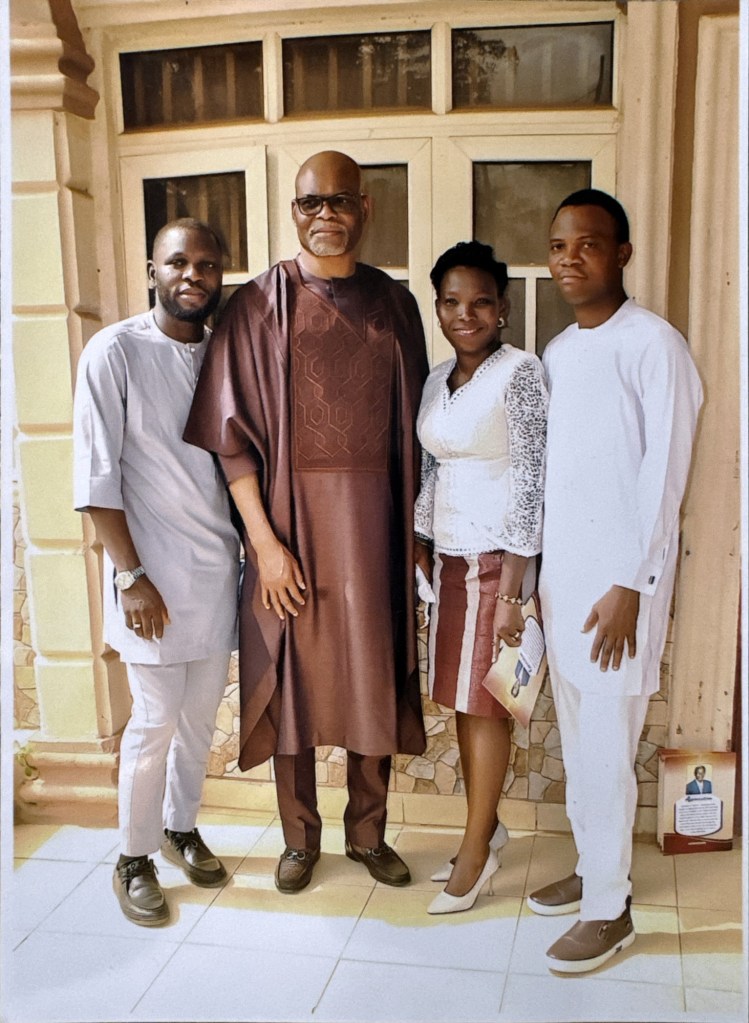
 Isaac Boluwatise
You must be logged in to post a comment.